-
What Clarke floor machines are actually worth considering in 2025?
-
Is the Clarke M17 floor scrubber outdated, or still worth buying?
-
What does a Clarke HD Plus tool box cost—and is it worth adding?
-
Should I rent or buy a walk-behind floor scrubber in Green Bay?
-
Are robot scrubbers like the AvidBot actually ready for daily use?
-
What's the most avoidable mistake when ordering Clarke parts?
I've been handling floor equipment orders for warehouses, schools, and manufacturing plants across the upper Midwest for six years. I've personally made—and documented—11 significant mistakes, totaling roughly $18,000 in wasted budget. Now I maintain our team's pre-order checklist so the same errors don't happen twice.
These are the six questions I answer most often, with the honest answers I wish someone had given me on day one.
What Clarke floor machines are actually worth considering in 2025?
The mistake I see most often—and the one I made early on—is buying for the square footage on paper without thinking about how the machine will actually run day to day. The Clarke lineup covers walk-behind scrubbers, rider scrubbers, sweepers, and industrial vacuums. For most facilities in the 10,000–50,000 square foot range, a walk-behind model is the right starting point. Above that, a rider scrubber earns its higher price through labor savings. Below that? Honestly, you should be renting.
What I mean is: buy based on daily run time, aisle width, and floor surface—not just facility size. I once recommended a ride-on scrubber to a customer with a facility that seemed big enough. It spent most of its life parked because the aisles were too narrow to turn around in. That was a $7,000 mistake. The machine wasn't bad. The fit was wrong, and that's on me.
Is the Clarke M17 floor scrubber outdated, or still worth buying?
I get asked about the M17 constantly. It's been around for years, and it's not flashy. But here's the thing: we still repair more M17 walk-behind scrubbers than any other machine in this class—and we repair them because they're worth repairing. Parts are available, technicians know the machine, and the design hasn't changed so drastically that you're dealing with an orphaned model.
In 2024, I ordered an M17 for a food-processing plant that had tried a cheaper imported scrubber the year before. That import broke down three times in eight months, and parts took weeks to source each time. The M17 has run over a year with nothing but routine maintenance. There's something satisfying about recommending a machine that just works, after years of watching flashier options fall short.
That said, the M17 isn't a specialty tool. If your floors are mostly tile, or you're dealing with heavily stained rough concrete, I'd look at other options. It's a solid mid-range workhorse, not a magic bullet.
What does a Clarke HD Plus tool box cost—and is it worth adding?
The HD Plus tool box is one of those accessories people ask about after they've bought the machine, not before. As of early 2025, dealer pricing for the Clarke-branded HD Plus tool box lands in the $250–$450 range, depending on whether it's bundled into a package. I've seen standalone listings below $200, but I'd be careful there. (Should mention: I've had customers buy cheaper "compatible" tool boxes that didn't fit the mounting brackets properly.)
Is it worth adding? For multi-shift operations, yes—having the right tools on the machine saves real time when adjustments are needed mid-shift. For a single-shift facility with a stocked maintenance room nearby, you can probably skip it. The bigger mistake I see isn't buying the tool box. It's paying full accessory markup without negotiating it into the overall package. Ask the dealer to include it. You'd be surprised how often that works.
This pricing was accurate as of Q1 2025. The equipment market changes fast, so verify current rates before budgeting.
Should I rent or buy a walk-behind floor scrubber in Green Bay?
Renting makes sense for one-time deep cleans, seasonal spikes, and facilities under 10,000 square feet. In Green Bay, that covers a lot of users—churches doing spring cleaning, auto dealerships prepping for big weekends, warehouses washing away the road salt that gets dragged in off the streets in March. A walk-behind scrubber rental in this area runs about $200–$400 per day as of late 2024, depending on whether you need a straight scrubber or a sweeper-scrubber combo.
Buying makes sense when the machine runs weekly or more. I had a customer in De Pere who rented every other week for two years. They eventually calculated they'd spent almost $15,000 in rental fees—on a machine they could have bought outright for $12,000. That's the number that should drive your decision.
I used to push rental on everyone because it felt like the conservative recommendation. It's not. If you're renting two or more days a month consistently, buying usually wins. But if you need a scrubber for post-construction cleanup or a one-time event, rent it and don't look back.
Are robot scrubbers like the AvidBot actually ready for daily use?
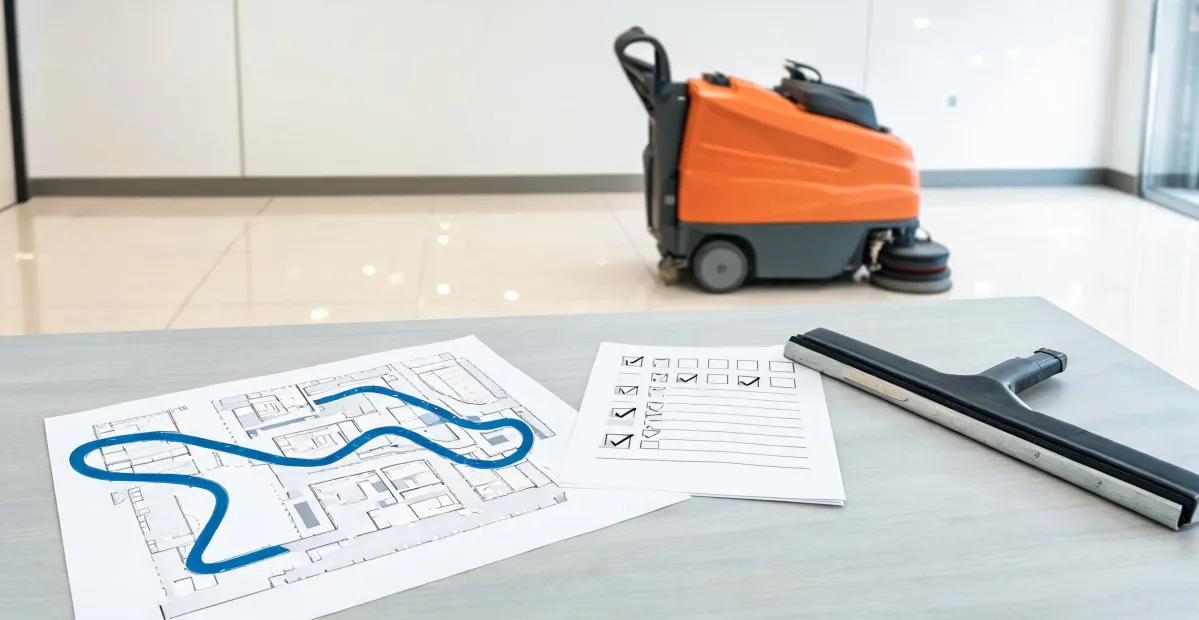
I've had customers ask whether they should skip a traditional walk-behind and go straight to an autonomous robot like the AvidBot. My honest answer: it depends on your facility. AvidBots are impressive—they map routes, navigate obstacles, and free up labor. But they perform best in predictable layouts with clear aisles and minimal visitor traffic. Warehouses with shifting racking or retail stores with customers on the floor are tougher environments.
The question I ask customers: what's your actual chokepoint? If it's labor availability, a robot might genuinely help. If it's a cleaning quality issue on a specific floor type, a robot won't fix that. (Should mention: I learned this when I recommended an autonomous machine to a customer with heavily stained concrete. It just spread the stains around more evenly.)
The upside is real labor savings. The risk is the robot struggling in a dynamic environment. I kept asking myself: is the labor savings worth potentially disrupting a workflow that already sort of works? And per FTC guidelines, when a manufacturer claims a machine is "labor-free" or "green," dig into what that actually means. We've seen "autonomous" machines that still needed a human 30% of the runtime—filling tanks, swapping pads, resetting error codes.
What's the most avoidable mistake when ordering Clarke parts?
I'll answer this with my own most expensive mistake. In Q3 2023, I ordered $2,300 in replacement squeegee blades and brush heads for a customer's Clarke machine—without checking the model's serial number against the parts diagram. The parts looked right in the photos. They weren't. Every single item fit the previous-generation model. $2,300 sat in boxes for a month while the customer ran a machine that couldn't clean properly.
The lesson I now bake into every order: confirm the serial number before you order, and cross-reference the part number on the manufacturer's site. Also ask whether the part is original equipment or aftermarket. Aftermarket parts are cheaper and often fine—but not always. Squeegee blades seem simple until you get one that doesn't flex correctly.
And don't assume "compatible" means identical. The part might bolt on and still underperform. Also factor in shipping. USPS rates went up again in January 2025—a First-Class letter now costs $0.73—and parts ship at parcel rates, which add up faster than people expect. I've learned to include freight in every parts quote instead of acting surprised when it appears on the invoice.