-
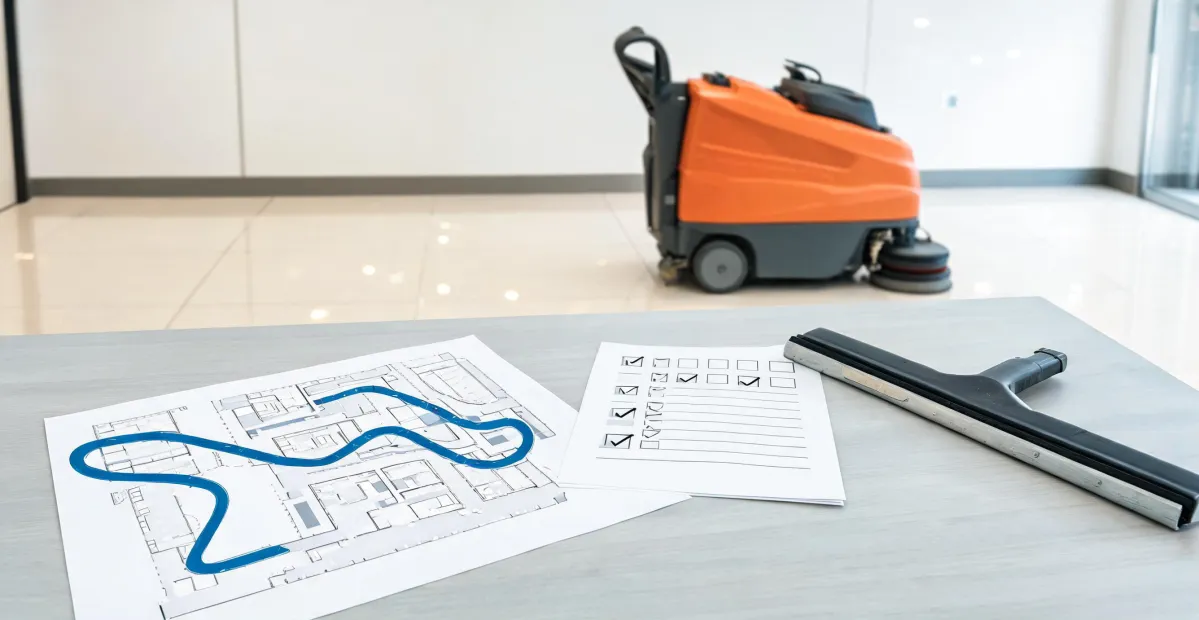
The 7-Point Floor Scrubber Checklist
-
1. Measure the cleanable area, not the building size
-
2. Test the floor sealer and check the floor profile
-
3. Check the path from the dock to the far corner
-
4. Calculate daily run time before you get attached to a model
-
5. Don't buy on "floor scrubber spin" alone
-
6. Run a demo on your actual floor before you buy
-
7. Verify parts availability and service support before you commit
-
1. Measure the cleanable area, not the building size
-
Workshop floor scrubber: extra notes for smaller spaces
-
Final mistakes I still see after all these years
Last year I watched a costly floor scrubber mistake happen in real time. A warehouse manager ordered a ride-on machine before walking his own aisles. The unit delivered, looked clean and capable, and then couldn't turn around in his racking. The spec sheet said "compact." The aisle didn't agree.
That kind of mistake doesn't happen because the machines are bad. It happens because the buying process skips verification.
I've been on the buyer side of that too. In 2019, I approved an order for a Clarke floor scrubber without checking the actual coating on the warehouse concrete. The machine scrubbed exactly as designed. It also pushed water into the unsealed slab, and after the floor dried, it left a white chalky dust that looked like a bad epoxy failure. My supervisor still brings it up.
So this is not a sales pitch. It's a checklist I now use before ordering any floor cleaning machine for warehouse or workshop floors.
There are 7 points. If you're in the middle of a purchase decision, read them before you sign anything. If you already bought something, use them to double-check your installation and operator training plan.
The 7-Point Floor Scrubber Checklist
I use this for both walk-behind and ride-on machines. It works for new units too, but it matters even more if you're considering a pre-owned machine or a rental fleet option.
1. Measure the cleanable area, not the building size
The first number to find is the actual floor area the machine needs to clean each day. That's not the total square footage of the building.
In a warehouse with racks, pallet staging, workbenches, and parked equipment, the cleanable surface can be 50% lower than the building footprint. I once worked in a 42,000-square-foot facility where the real scrub path was about 18,000 square feet. That difference matters because it changes the machine category.
Walk the floor with a measuring wheel or use a recent CAD layout. Subtract every area that is permanently occupied. Add a small margin for seasonal storage areas if you clean those too.
That number tells you whether you need a walk-behind or a ride-on, and how wide the scrub deck should be. It's the single most important number in the purchase.
2. Test the floor sealer and check the floor profile
A floor scrubber doesn't just scrub. It leaves the floor wet, and the recovery system then pulls that water back into the machine. If the floor isn't sealed properly, water gets into the concrete pores. The result is dust, discoloration, and sometimes a coating failure that you'll blame on the machine even though the floor was the problem.
Simple test: pour a small cup of water on a clean section of the floor. If the water beads and stays on the surface, the slab is sealed. If it darkens and absorbs quickly, the floor is unsealed or the sealer is failing.
That test is worth more than an hour of brochure reading.
Also check the floor profile. Expansion joints, broken trowel marks, and slight slopes affect squeegee performance. A machine with a rigid squeegee will leave a water trail on uneven concrete. Ask the manufacturer or dealer how the squeegee system handles shifting joints and expansion gaps.
3. Check the path from the dock to the far corner
You can fit a machine into a warehouse and still not be able to use it in the places that matter.
Measure the narrowest door opening, the distance between rack rows, and the turning space at the end of each aisle. If a machine has a 40-inch scrub deck but your rack aisles are 46 inches wide, you may still be fine. If you have a 45-inch deck and 48-inch aisles, the machine will constantly fight the racking.
Don't forget battery removal access. Some ride-on machines require overhead clearance for battery lifts. In a low-ceiling maintenance room, that can turn routine battery swaps into a safety problem.
I made this mistake with a 32-inch machine in a workshop bay. It fit through the door with two inches to spare, but the operator had to angle the machine perfectly every time. One wrong turn meant a gouged door frame. The machine was returned after three weeks. The reorder costs and freight charges were avoidable.
4. Calculate daily run time before you get attached to a model
Warehouse floor cleaning often happens on a schedule. If you have one shift, you might scrub after operations end. If you have two shifts, the machine may need to run longer than its continuous runtime spec.
Figure out the maximum uninterrupted cleaning time per charge. Then add 20%.
A small walk-behind floor scrubber with a 2-hour battery may look like enough for a 10,000-square-foot workshop. But if the operator has to empty the tank, fill it again, and stop for breaks, the real cycle time grows. On larger warehouses, a ride-on with extended runtime or a lithium battery option is often worth the extra cost.
Here's something many vendors won't put in the headline: the quoted price does not always include the battery or charger. It's a common way to make a floor cleaning machine for warehouse use look more affordable than it really is. Always ask what is included in the delivered price.
5. Don't buy on "floor scrubber spin" alone
Most people compare "floor scrubber spin" by looking at pad RPM. That's understandable because RPM is easy to find on a spec sheet. But RPM without brush pressure is almost meaningless.
A high spinning pad under light pressure will glaze over grease and tire marks. A slower spinning pad with proper downforce and the right cleaning chemical will actually lift the dirt.
In 2020, I chose a machine with an impressive RPM number. On a clean demo floor, it looked fantastic. In our workshop, on oil-stained concrete, it just polished the grime. The issue wasn't the spin. It was pad pressure and chemistry.
Ask for three numbers when comparing scrubbers:
- Brush/pad downforce, usually listed in pounds
- Clean water flow rate
- Squeegee width versus scrub deck width
Those numbers will tell you more than the floor scrubber spin speed ever will.
6. Run a demo on your actual floor before you buy
Demos work best when they feel like work.
Find a dirty patch of floor in your own facility. Better yet, mark out a path that includes an expansion joint, a sticky oil stain, and a corner where water tends to pool. Then run the machine through it.
If the sales rep only offers a demo in a clean showroom, push back. You're not buying a mirror. You're buying a machine that will handle forklift tire marks, dust, and whatever spilled from a leaking drum.
During the demo, don't just watch the front of the machine. Walk behind it and inspect the water trail. If the squeegee leaves streaks when the machine turns, it will leave streaks every day.
I still had doubts after my last demo. The numbers said the smaller walk-behind was the right machine. My gut said I would eventually want the larger model. The demo proved the walk-behind could handle our worst aisle in one pass. That was my positive signal, and the machine is still in service today.
7. Verify parts availability and service support before you commit
Every scrubber will eventually need squeegee blades, brush replacements, and a service visit. A floor cleaning machine is only as reliable as the parts pipeline behind it.
Ask the seller directly:
- How quickly can you get a squeegee blade?
- Which pad types are stocked locally?
- Is the charger available as a replacement part?
- What is the typical turnaround for a repair visit?
If they can't give you a straight answer before the sale, imagine calling them after the machine is down.
I'm not going to name competitors, and I don't think you should buy purely on brand loyalty. But Clarke has been in the commercial equipment space long enough that most common parts for current and recent models are easy to source. That matters more than any promotional discount.
Workshop floor scrubber: extra notes for smaller spaces
If your search is specifically for a workshop floor scrubber, the advice is slightly different.
Workshops often have tight corners, vehicle lifts, workbenches, and scattered tools. A big ride-on machine may be overkill. A walk-behind model with a 24- or 26-inch deck is often more practical because it can turn around in tighter spaces and can be charged in a normal maintenance area.
Don't buy based on the largest tank or the fastest cleaning rate. In a workshop, maneuverability and service access often matter more than raw coverage.
Final mistakes I still see after all these years
Even people who follow the checklist sometimes miss these details:
No spare squeegee. A squeegee blade is a wear item. The moment it gets damaged, the machine stops drying. Keep one spare in stock.
Wrong floor pads. The same machine can behave differently with a red pad, a tan pad, and a diamond abrasive pad. Test pads on your floor type before buying in bulk.
Storing the machine with the pad down. Many novices leave the scrub deck resting on the floor after use. That can distort the pad and press marks into the brush head. Raise the deck, turn the machine off, and rinse the squeegee.
No operator training. A machine used by a different person every shift will eventually get misused. Put a simple sticker on the machine listing start, stop, and cleaning steps. It doesn't need to be a 20-page manual. It needs to be practical.
The goal is the same regardless of whether you're buying one floor scrubbing machine or outfitting a national distribution network: first pass clean, every time.
Five minutes of measuring still beats five days of correction. Every time I've skipped this checklist, I've paid for it. Every time I've used it, the machine ended up doing exactly what the brochure promised.