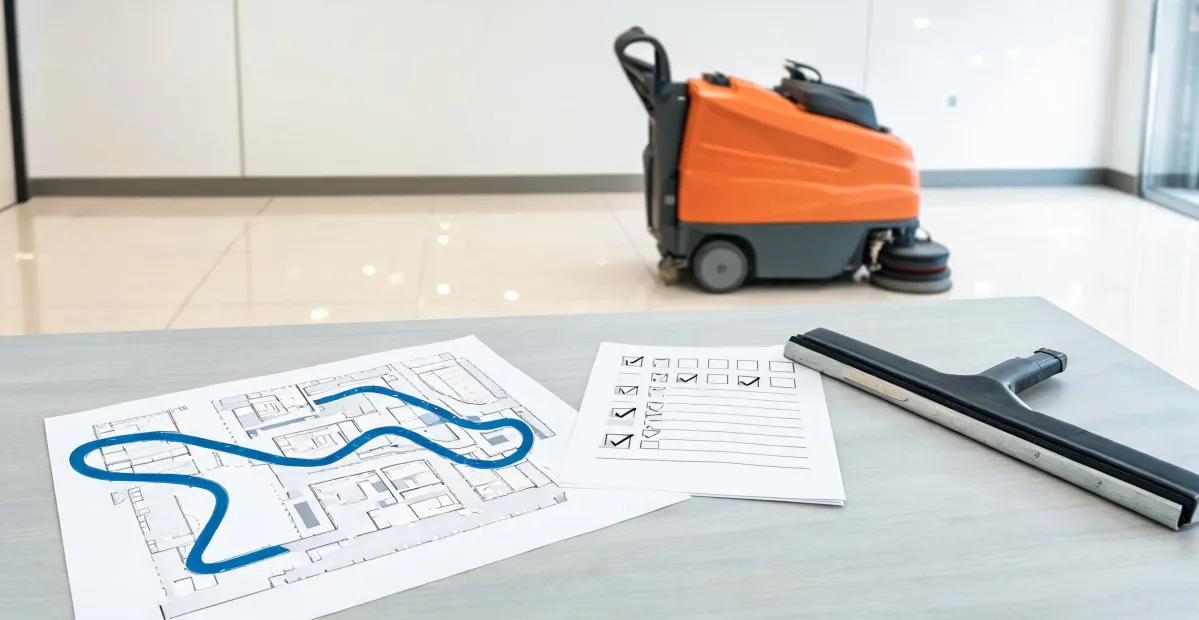
If you need a commercial floor scrubber in under a week, the most reliable move is to buy a Clarke auto scrubber from a dealer who lists every cost up front — freight, batteries, startup, warranty. In my experience, that combination beats a lower-priced machine with a vague "estimated" delivery every time.
Note: If you're looking for "Jason Clarke CVS (commercial valuers & surveyors)", you're in the wrong place. This article covers Clarke floor scrubbers, sweepers, and pressure washers.
I coordinate emergency equipment orders for industrial and commercial facilities. I've handled 200+ rush orders in 8 years, including same-day turnarounds for hotels, warehouses, and event venues. I've also seen operations save $500 on a machine, then pay $1,200 in expedite fees and lost labor when it didn't show up on time.
Take a case from March 2025. A distribution center called on Monday at 10 a.m. with a problem: their tenant move-in was scheduled for Wednesday, and their existing floor scrubber had a hydraulic failure. They needed two Clarke auto scrubbers and a walk-behind sweeper on site by Wednesday morning. Normal lead time is 14 days. We found a local dealer with two CS20 auto scrubbers in stock, a 730 sweeper available as a rental, and compatible parts for the models they already had. We paid about $1,900 extra in freight and rush fees on top of the $34,000 base order. The machines arrived at 6:42 p.m. Tuesday. Total time from call to delivery? About 33 hours. Actually, 32 hours and 40 minutes. Missing that deadline would have triggered a $50,000 penalty clause in their lease. The rush fees were almost a rounding error.
That's the mindset you need when buying commercial cleaning equipment, especially on a deadline. The most important spec isn't the brush width or the battery capacity. It's: can you get the machine when you need it, and can you get it repaired when it breaks?
Why Clarke makes sense for fast turnarounds
Clarke isn't the only brand that makes reliable floor maintenance equipment. But for quick delivery, it has two advantages. First, the product line is broad. You can get auto scrubbers, walk-behind sweepers, pressure washers, and dust collectors from the same brand. That consolidates parts, training, and vendor relationships. I've seen facilities with four different brands in one equipment closet; every one requires a different supplier, a different control layout, and a different spare parts bin. That's a headache you don't want during an emergency.
It's tempting to think that any auto scrubber with the same battery capacity and brush width will perform the same. In reality, parts availability and dealer support often matter more than the spec sheet. And that's where Clarke's dealer inventory becomes a real advantage. In my area, the local Clarke distribution center stocks common wear items — brushes, squeegee blades, filters, hoses — so a replacement part is usually within 24 hours. Industry standards like ISSA's CIMS emphasize vendor reliability and service support; this is exactly what they mean.
Clarke also supports pre-owned and rental programs. When a customer wants to save money or only needs a machine temporarily, we've put together a used Clarke auto scrubber with a warranty and a service plan. That flexibility is rare in this market.
The real cost of a "floor scrubber sale"
When you see a floor scrubber sale with an unusually low price, pause. Does that price include shipping? What about the battery charger? Is startup or training extra? I've learned to ask "what's NOT included" before "what's the price." The vendor who lists all fees upfront — even if the total looks higher — usually costs less in the end.
People assume the more expensive upfront price means the dealer is making more money off you. Actually, the causation runs the other way. A dealer who charges a fair, transparent price can afford to invest in parts stock and service. A dealer who lowballs the base quote often makes up the margin on the back end — freight, crating, "expedited" handling fees. In the end, you pay more, and you have less support.
And rush orders aren't more expensive because they're "harder." They're expensive because they disrupt the dealer's planned workflow — pulling inventory, skipping other jobs, special freight. That's fair, as long as it's disclosed upfront.
A $400 mistake that changed my checklist
Last spring, I was triaging a rush order for a pressure washer part. I didn't double-check the serial suffix. I knew I should verify, but I thought, "what are the odds?" The odds were 100%. The part didn't fit. We paid $400 extra to overnight the correct part, and the client lost a day of uptime. That mistake wiped out the profit on the job.
So now, my rule is absolute: never rely on memory or "it's probably the same." On every rush order, we pull the serial number and match it against a parts diagram. It takes two minutes, and it's the easiest way to avoid a failed delivery.
If you're in Denver and need a floor sweeper
Here's another common search: "floor sweeper denver." If you're a facility manager in Denver, the same advice applies. Find a dealer with local stock and a written delivery promise, not just a good web price. We've delivered sweepers to Denver-area warehouses from regional stock in under 24 hours because someone maintains local inventory and a service network.
When a Clarke auto scrubber isn't the right answer
I'm not going to tell you Clarke is perfect for every scenario. If you need a custom machine with unusual brush heads or very specific battery chemistry, a local specialty manufacturer might be better. If you need the machine in hand within an hour, you're at the mercy of the nearest dealer, not a national brand. And if you're searching for the troy bilt pressure washer parts breakdown, you're asking about a different brand — but the same principle applies: know the exact model and have a way to source parts before you commit.
Also, not every Clarke dealer is great. I've worked with sharp ones and nearly-useless ones. The brand sets the table, but the dealer you choose still matters. Ask about parts stock, emergency order handling, and which models they can get parts for within 24 hours. Their answers tell you everything.
What to ask before you sign
Before you sign that purchase order, confirm:
- the final total cost, including all freight, tax, and fees
- the guaranteed delivery date — in writing
- which spare parts are in stock and can ship within 24 hours
- what warranty and post-warranty service look like
Find a supplier who answers those four questions clearly, and you'll be in good shape. If they only talk about the base price, keep looking.
At the end of the day, buying a Clarke auto scrubber — or a whole floor care package — doesn't have to be a leap of faith. The machines are solid, but the supplier is the real insurance. The best dealer is the one who shows you every number before you commit, not after.